
On this page
What fascia and soffit do
The fascia is the vertical board along the edge of the roof. It closes off the ends of the rafters and carries the gutter. The soffit is the horizontal underside of the roof overhang, often vented to let air into the attic. When gutters overflow, leak or sit wrongly on the roof edge, both boards take the water. On many Craftsman houses there is no continuous fascia at all, just exposed rafter tails, which take the water instead.
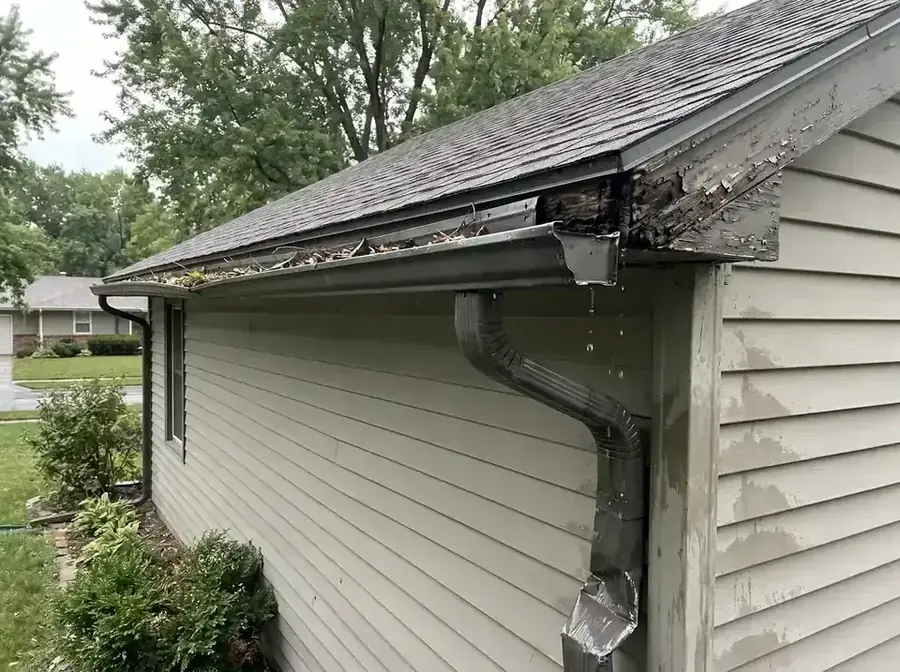
Signs of fascia and soffit damage
- Peeling or blistering paint along the roof edge.
- Dark stains or green growth below gutter corners and end caps.
- Soft wood that a screwdriver sinks into.
- Gutters pulling away, with hangers or spikes backing out.
- Sagging or broken soffit panels.
- Animals or insects getting into the overhang.
- Mold or mildew on the underside of the overhang.
Why fascia rots in Seattle
The wet season is long. With rain on about 156 days a year, wood that gets wet rarely dries out between October and April. A gutter that overflows behind a plugged outlet soaks the same stretch of fascia for weeks.
Debris holds water. Needles and moss packed against the back of the gutter keep the board behind it damp. Oregon State University Extension notes that clogged gutters can back water up to the lowest course of the roof.
Old wood, many coats of paint. Much of Seattle's housing is from the early twentieth century. Northern Beacon Hill's homes are mostly early 1900s Craftsman bungalows and Seattle box houses, and Wallingford has many 1920s bungalows. Once water gets behind old paint, it stays.
Missing drip edge. On older roofs, water runs off the shingles and down the face of the fascia behind the gutter.
How fascia and soffit repair works
- Take the gutter down along the damaged section.
- Probe the wood. The contractor finds where the rot starts and stops, including the rafter tails behind the fascia.
- Cut out and replace the soft sections with new lumber, primed on all sides, or with PVC or composite boards.
- Repair the soffit where it is rotten, broken or open to animals, keeping attic vents clear.
- Fit drip edge if it is missing so water goes into the gutter.
- Paint or wrap. New wood is painted, or wrapped in aluminum once it is sound.
- Re-hang the gutter on hidden hangers screwed into solid wood, or on rafter brackets where there is no fascia.
Fascia wrap
Aluminum fascia wrap gives a low-maintenance finish over sound wood. It should not be used to hide rot: wood that is already soft keeps rotting under the wrap, out of sight, until the gutter falls off. In a wet climate, rot under wrap spreads quickly. Ask the contractor to confirm the wood is sound before it is wrapped.
A worked example
Here is an illustration. A Craftsman bungalow in Columbia City has peeling paint and green staining at one corner where the gutter outlet has been plugged with needles for several winters. With the gutter down, the contractor finds 12 feet of soft fascia and two rafter tails rotting at the ends. The rafter ends are repaired, new primed fascia goes up, drip edge is added, and a new seamless gutter with a larger outlet is hung on hidden hangers.
Cost
Prices depend on how much wood is rotten, the height, and whether the board is painted wood, wrapped in aluminum or replaced with PVC. Gutter repairs nationally average about $390 according to Angi; fascia replacement along a long run, with the gutter taken down and re-hung, sits above that. National figures; the contractor's quote is the real number.
Preventing it from coming back
- Keep gutters clean and outlets clear, especially under conifers.
- Fix leaking corners promptly; in Seattle they drip for months.
- Fit drip edge where it is missing.
- Size outlets and downspouts so they keep working when needles arrive.