
On this page
What can go wrong with gutters?
Gutters fail in a small number of ways, and most of them can be repaired without replacing the whole system. A Seattle house usually calls about one of these:
| Problem | Usual cause | Repair |
|---|---|---|
| Moss and needle clogs | Fir and cedar needles, moss and leaves packing the outlets | Clear outlets and downspouts; larger outlets or guards |
| Leaking gutters | Dried sealant at corners and end caps, split seams, pinholes | Clean and reseal joints, replace failed corners |
| Sagging gutters | Loose spikes, wide hanger spacing, the weight of wet debris | New hidden hangers screwed into solid wood |
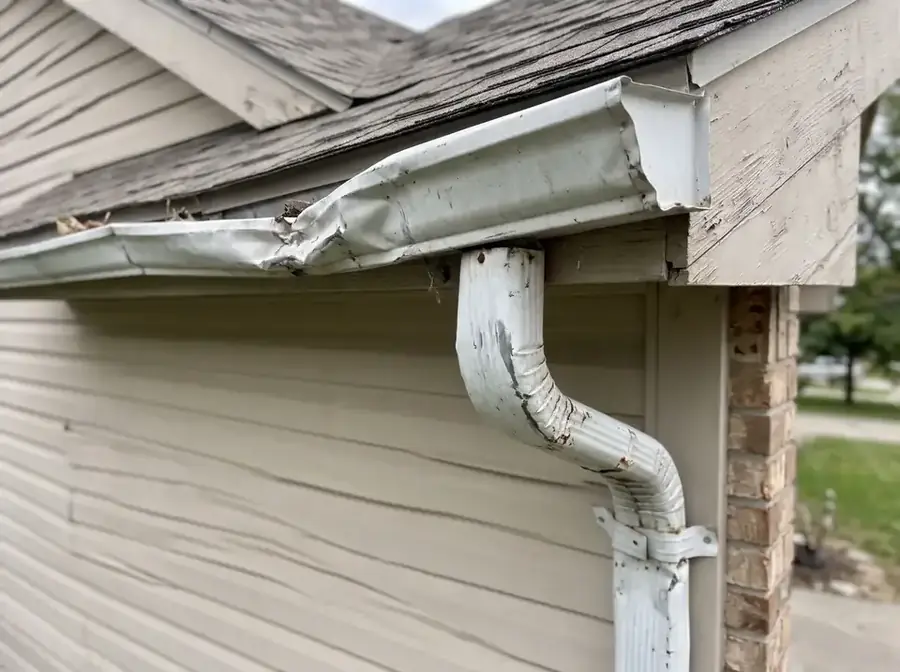
| Wind and tree damage | Windstorms and falling limbs | Replace bent sections, hangers and downspouts |
| Downspout repair | Crushed or disconnected downspouts, blocked buried lines | Replace sections, add extensions, clear or reroute lines |
| Fascia and soffit | Years of overflow soaking the wood behind the gutter | Replace soft boards, then re-hang the gutter |
Why gutters fail in Seattle
Three things account for most repair calls here.
Months of rain. Sea-Tac averages about 39.3 inches of precipitation a year, but the bigger story is frequency: measurable rain or snow on about 156 days, and around 18 or 19 rainy days a month from November through January. A gutter that leaks a little at one corner leaks almost every day for half the year, and that steady drip rots fascia and stains siding.
Needles and moss. Firs, cedars and pines drop needles year round, and moss grows on shaded roofs and washes off in clumps. Together they pack outlets and build a wet mat along the trough. Seattle's canopy covered about 28 percent of the city in 2021, and much of it hangs over houses.
Wind and falling limbs. The Hanukkah Eve windstorm of 2006 cut power to more than 175,000 Seattle City Light customers, and the November 2024 bomb cyclone to more than 114,000, mostly from trees and limbs coming down. Easterly winds in 2024 hit trees from the opposite of the usual direction, which made them easier to topple. A limb that lands on a gutter bends the trough, tears hangers and crushes downspouts.
Water sheets over the front edge during a long rain
Usually a blocked outlet: fir needles and moss granules pack into the hole where the downspout starts. It can also be a run that has lost its slope, or a 5-inch gutter collecting from a big roof plane or a valley. The outlet is cleared, the pitch checked with a level, and the run re-hung or upsized if needed. See moss and needle clogs and 6-inch gutters.
A steady drip at a corner or end cap
Corners and end caps are the only joints in a seamless run, and the sealant in them dries and cracks with age. The joint is cleaned to bare metal and resealed, or the corner replaced if the metal has split. See leaking gutters.
A gutter sags, or has pulled away from the fascia
Hangers have loosened, are spaced too far apart, or are holding a gutter full of wet debris. If the board behind is soft, new screws will not bite until the wood is replaced. See sagging gutters and fascia and soffit repair.
A limb or a windstorm bent the gutter
Kinks that hold water, torn hangers and crushed downspouts affect drainage even when the damage looks small from the ground. Check the roof edge and fascia too. See wind and tree damage.
Water pools against the foundation or runs down the slope
The downspout is discharging too close to the house, or the buried line it feeds is blocked or broken. On sloped lots, where the water ends up matters as much as where it starts. See downspout repair and downspout drainage and your foundation.
Green growth or seedlings in the gutter
Moss washing off the roof and decaying needles turn into soil in the trough, and plants root in it. That weight and the water it holds speed up sagging and corrosion. See moss, needles and gutters.
How a gutter repair visit works
- You describe the symptom. Where it is, when it happens, and how long it has been going on.
- The contractor inspects. Pitch, hangers, joints, outlets, downspouts and the fascia behind the gutter, plus where the water goes on the ground.
- You get the cause and a price. A written quote for the repair, and an honest view on whether replacement makes more sense.
- The repair is made and tested. Water from a hose should run to each outlet and out of each downspout with nothing left standing.
Repair or replace?
Repair when the problem is isolated: one leaking corner, one sagging run, one crushed downspout, one wind-bent section. Replace when the gutters are old sectional runs with a seam every 10 feet, are rusting or split, are badly undersized for the roof, or keep pulling away because the fascia has rotted along much of the house. If you are re-roofing, that is usually the moment to replace the gutters too. The repair or replace guide goes through the decision in more detail.
Storm damage and insurance
After a windstorm or a falling tree, photograph the gutters, downspouts and fascia from several angles before anything is moved, and note the date. Sudden wind and tree damage is often covered by homeowners insurance, subject to the deductible; wear and slow rot usually are not. Seattle's hazard plan notes that traditional homeowners policies do not cover landslide damage, which is one more reason to keep downspout water off slopes.
Check any contractor before signing. Washington requires contractors to register with L&I and carry a bond and insurance, and on home jobs of $1,000 or more they must give you a signed Notice to Customer. Use L&I's Verify a Contractor tool.
Repairs to the drainage below the gutter
Many "gutter" problems are really downspout problems. A downspout that empties at the foundation sends roof water into the soil against the basement wall. A buried line that is blocked with needles or crushed by roots does the same thing out of sight. On steep lots, a downspout that dumps onto the slope can feed erosion; Seattle's construction department lists checking that downspouts are routed to a safe location among its landslide-season steps. In some older neighborhoods, roof downspouts still drain into the sewer, and the RainWise program may pay to redirect them. See downspout repair and RainWise and combined sewers.
Related services
- Gutter replacement when repairs no longer make sense
- Gutter cleaning to clear clogs before they cause damage
- Gutter guards to keep needles and leaves out
- 6-inch gutters for roofs that overflow even when clean